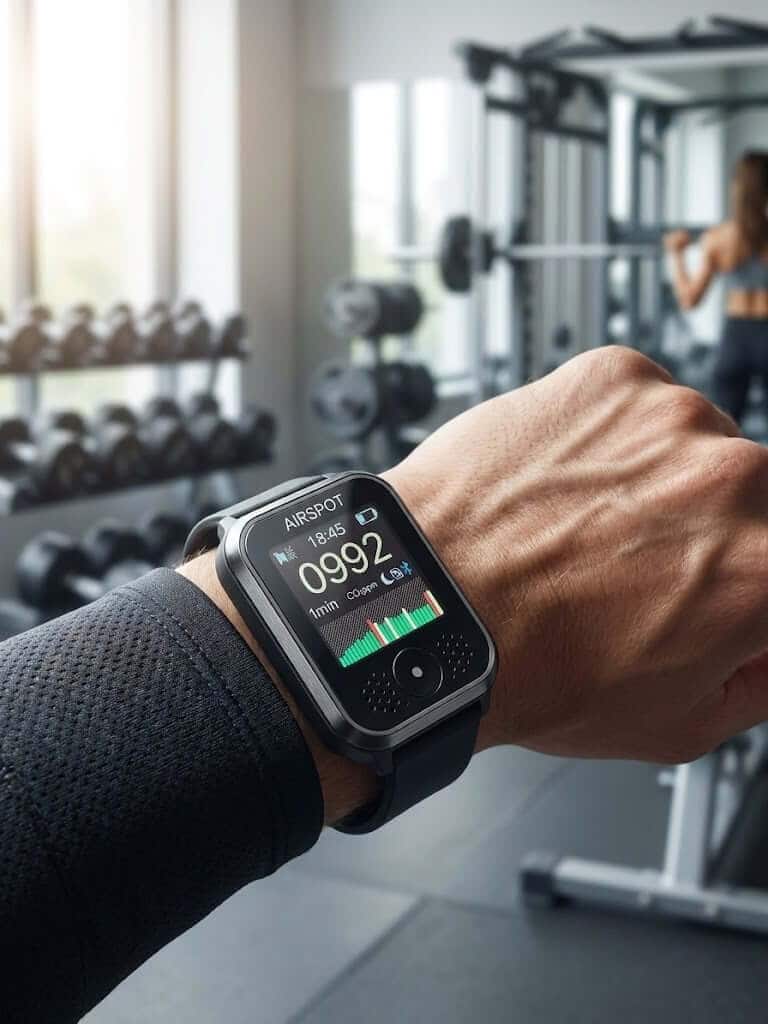

Walk into any modern gym and you’ll see people tracking everything—heart rate, calories, steps, sleep cycles, even recovery scores. Wearables have turned fitness into a data-rich environment.
But there’s one critical variable almost nobody measures:
The air you breathe.
It sounds simple, but air quality—especially indoor air—can have a direct, measurable impact on how you feel, how you perform, and how well you recover.

The Invisible Limiter
When you train, your body depends on oxygen to produce energy. The harder you push, the more oxygen your muscles demand. That’s why metrics like VO₂ max exist—they quantify your body’s ability to use oxygen efficiently.
But here’s the catch:
Even if your body is capable of high performance, your environment might not be.
In poorly ventilated indoor spaces, carbon dioxide (CO₂) levels rise quickly. Every exhale adds CO₂ to the air, and without fresh air exchange, concentrations can climb far above outdoor levels. While CO₂ isn’t toxic at typical indoor concentrations, it acts as a proxy for stale, rebreathed air—and it affects how your body feels and performs.

What Happens in a High CO₂ Environment?
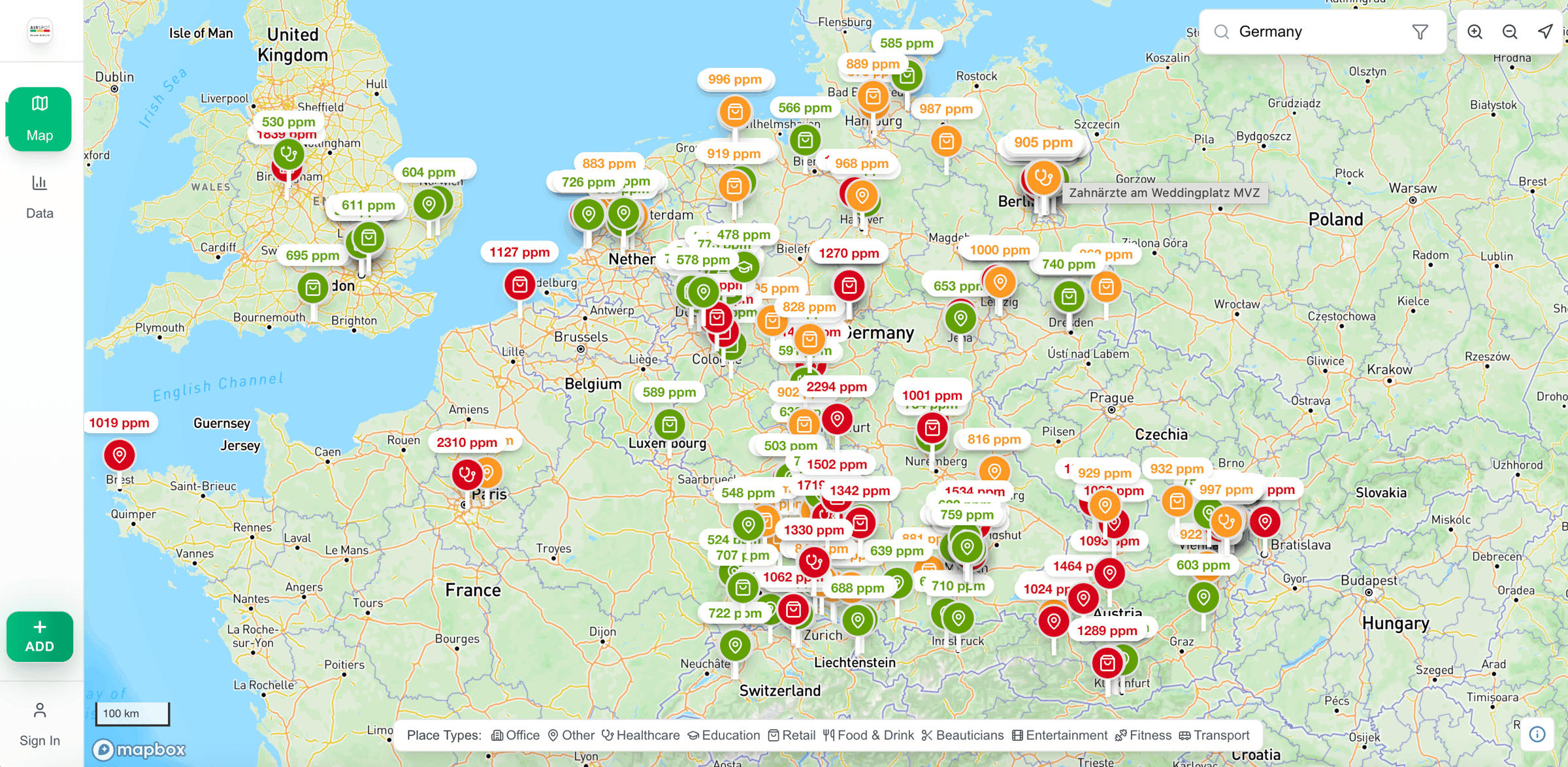
In a crowded gym, studio class, or home workout space with limited ventilation, CO₂ levels can easily exceed 1,500–2,500 ppm (parts per million), compared to ~420 ppm outdoors.
At these elevated levels, people often report:
Increased perceived exertion (workouts feel harder than they should)
Faster onset of fatigue
Reduced focus and coordination
Headaches or light dizziness in extreme cases
This isn’t just psychological. When CO₂ rises, it subtly alters the balance of gases in your blood and can influence breathing patterns, making your body work harder to maintain performance.
Why It Matters for Fitness
You might be doing everything right—training consistently, eating well, sleeping enough—but still feel like your performance is plateauing or inconsistent.
Air quality could be the missing variable.
Think about it:
You optimize your training program
You track recovery and nutrition
But you ignore the environment where all of that effort happens
That’s like tuning a race car but running it on poor-quality fuel.
The New Performance Mindset
Fitness is evolving from just “how hard you train” to “how well your entire system is optimized.”
That includes:
Training load
Recovery
Nutrition
Sleep
Environment
Air quality belongs in that list.
And unlike many fitness variables, it’s highly actionable. Opening windows, improving ventilation, or simply being aware of stale indoor air can make a noticeable difference in how you feel during a session.
A Simple Question
Next time a workout feels unusually tough, ask yourself:
Is it me—or is it the air?
What CO₂ Levels Do to Endurance Performance
Endurance performance is all about efficiency—how well your body delivers and uses oxygen over time. Runners, cyclists, and athletes of all kinds train to improve this system.
But there’s a factor that often gets overlooked:
The quality of the air you’re breathing while you train.
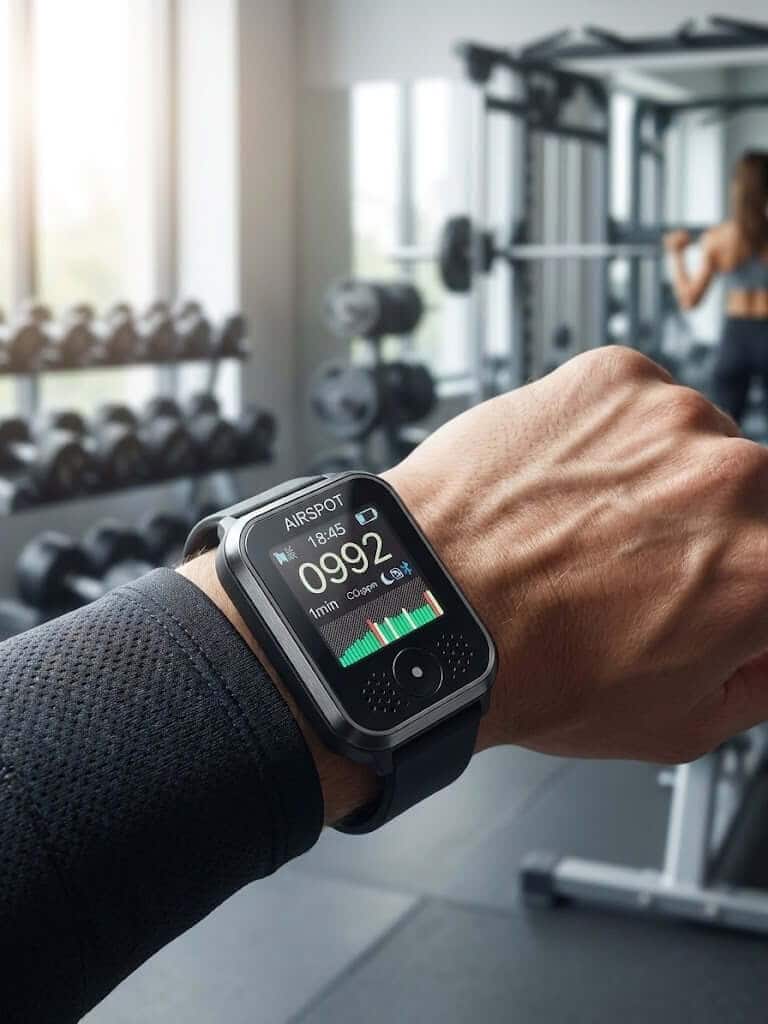
Understanding CO₂ as a Signal
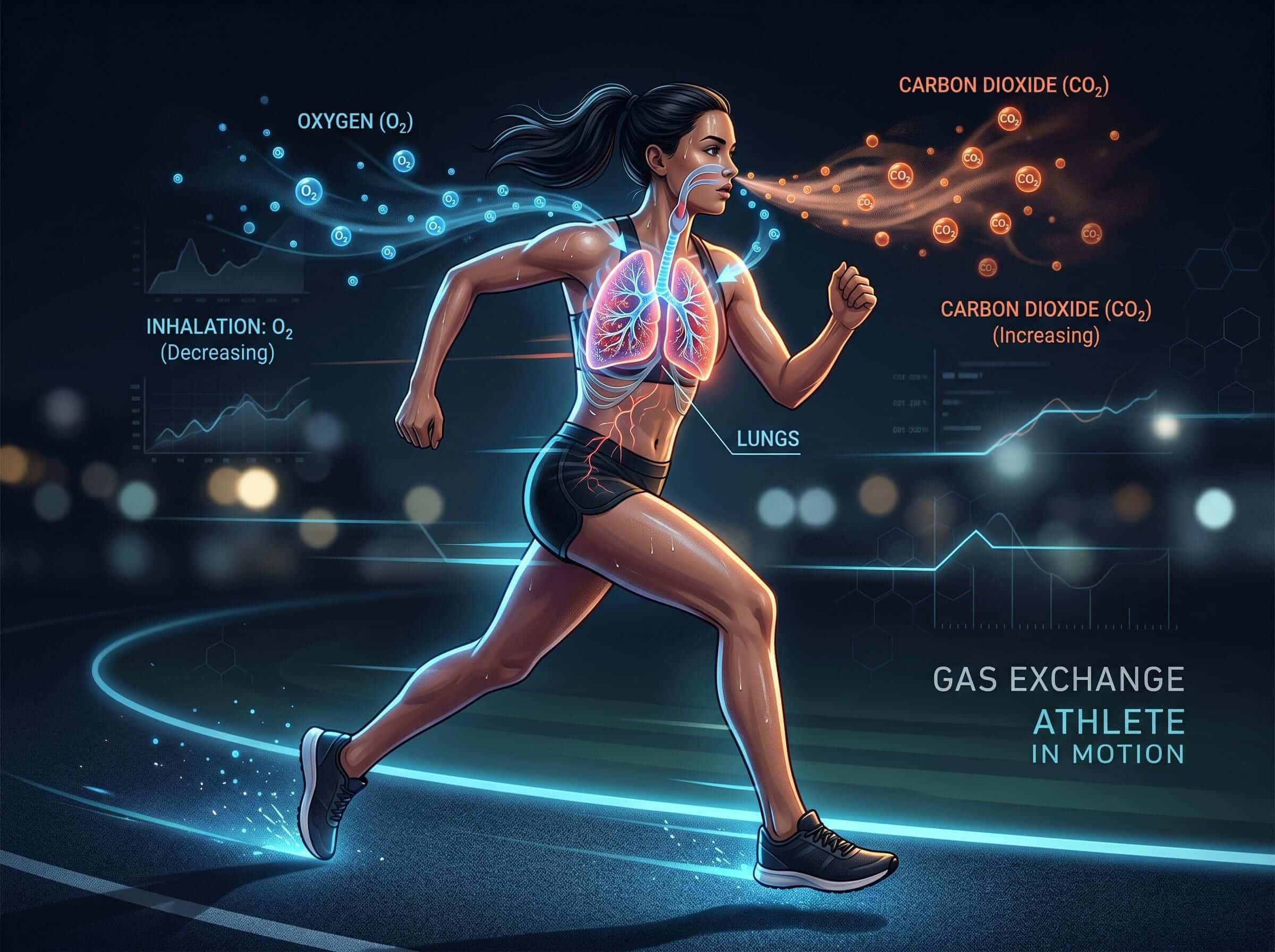
Carbon dioxide (CO₂) is a natural byproduct of breathing. Outdoors, levels are low and stable. Indoors, especially in crowded or poorly ventilated spaces, CO₂ builds up quickly.
While CO₂ itself isn’t harmful at typical indoor levels, it tells you something important:
How much of the air you’re breathing has already been exhaled by someone else—including you.
Higher CO₂ = less fresh air.
The Performance Impact
As CO₂ levels rise, several subtle but important things happen:
1. Breathing Feels Harder
Your body regulates breathing based on CO₂ levels in the blood. When environmental CO₂ increases, it can:
Alter your breathing rhythm
Increase the sensation of breathlessness
Make moderate effort feel intense
This is why a workout in a stuffy room can feel disproportionately difficult.
2. Perceived Effort Increases
Even if your actual output (pace, watts, reps) stays the same, your rate of perceived exertion (RPE) often climbs in high CO₂ environments.
That means:
You fatigue earlier
You may cut workouts short
You recover more slowly between intervals
3. Cognitive Performance Drops
Endurance isn’t just physical—it’s mental. Focus, pacing decisions, and coordination all matter.
Elevated CO₂ has been linked to:
Reduced decision-making ability
Slower reaction times
Increased mental fatigue
In practical terms, that can affect everything from pacing strategy to exercise form.
4. Recovery Takes a Hit
If you’re training in stale air repeatedly, the cumulative effect can be:
Lower-quality sessions
Reduced training stimulus
Slower long-term progress
You’re not just working harder—you’re getting less out of the effort.
Real-World Scenarios
Consider these common situations:
A packed spin class with closed windows
A home gym in a sealed room
A busy commercial gym during peak hours
In each case, CO₂ can climb quickly, especially during intense group workouts where everyone is breathing heavily.
What Levels Should You Care About?
While there’s no strict “fitness threshold,” general guidance looks like this:
400–800 ppm → Fresh air, ideal for performance
800–1,200 ppm → Acceptable, slight impact possible
1,200–2,000+ ppm → Noticeable performance effects
2,000+ ppm → Likely to impair endurance and comfort
The key isn’t perfection—it’s awareness.
Small Changes, Real Gains
Improving air quality doesn’t require drastic action:
Open doors or windows during workouts
Use fans to increase air circulation
Avoid overcrowded training spaces when possible
These simple steps can lower CO₂ and make workouts feel noticeably better.

The Takeaway
Endurance performance isn’t just about your lungs, your heart, or your muscles.
It’s also about the air.
If you’re serious about optimizing performance, it’s time to treat air quality like any other training variable—something you measure, understand, and improve.
Because sometimes, the difference between a great workout and a frustrating one isn’t your fitness level.
It’s what you’re breathing.