
From Breathalysers to Viral Detection: How Close Are We?
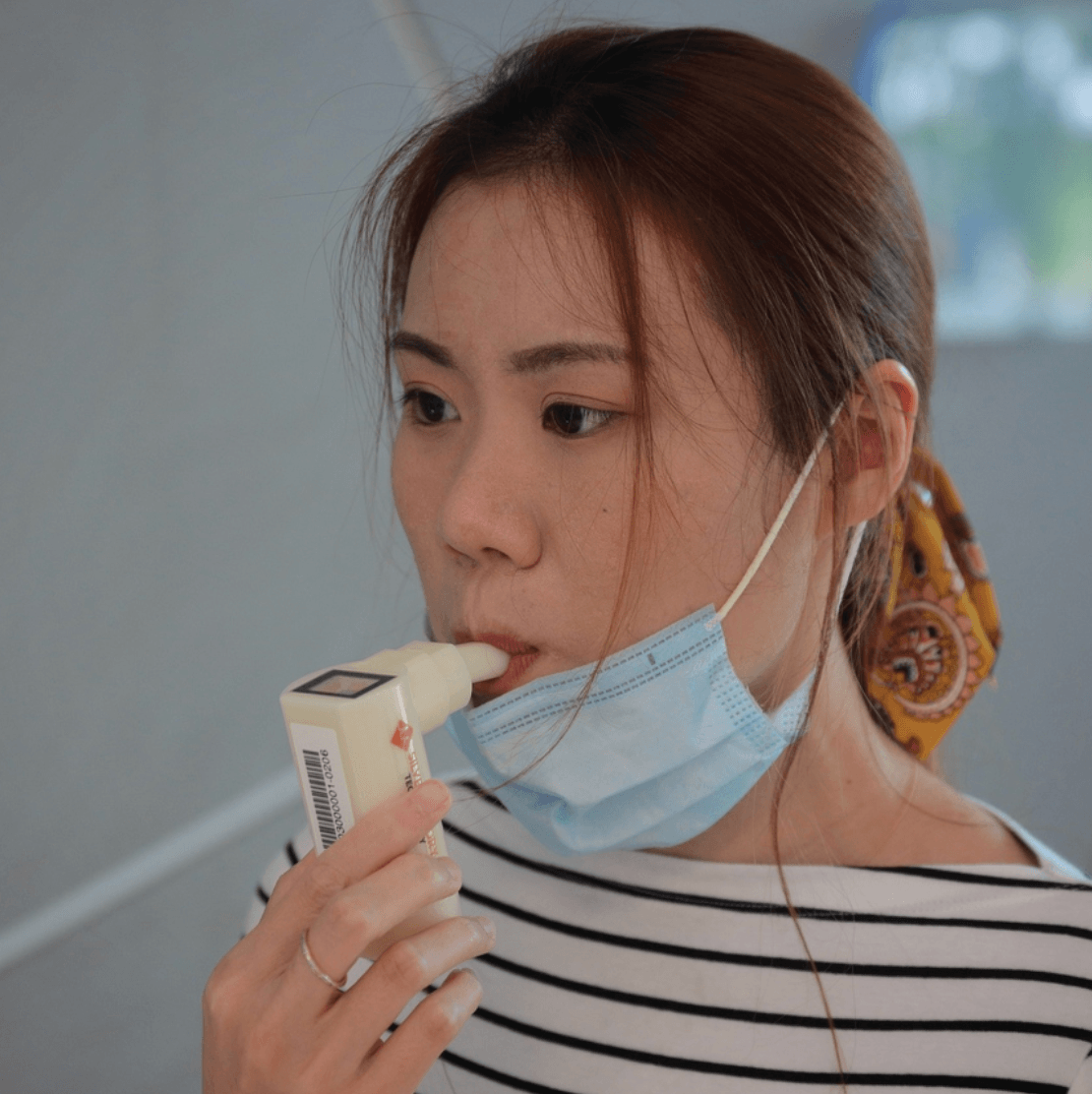
Imagine walking into your GP, airport or workplace, breathing normally into a handheld device for 30 seconds, and receiving a result a minute later telling you whether you're carrying influenza, COVID-19, RSV or another respiratory virus.
It sounds like science fiction—but it may be closer than many people realise.
While no equivalent of an alcohol breathalyser for viral infections exists today, researchers around the world are making remarkable progress. Advances in aerosol science, molecular diagnostics, artificial intelligence and sensor technology are bringing us steadily closer to rapid, non-invasive detection of respiratory infections.
Why Breath?
Every breath we exhale contains tiny droplets originating from deep within our respiratory tract.
These microscopic aerosols can carry:
Viral RNA
Proteins
Inflammatory biomarkers
Cells from our airways
Volatile organic compounds (VOCs) produced by our body's metabolism
Unlike a nasal swab, collecting a breath sample is completely non-invasive, painless and suitable for repeated testing. It also opens the possibility of screening large numbers of people quickly.
Four Technologies Leading the Way
1. Exhaled Breath Condensate
One of the most advanced approaches involves cooling exhaled breath so that microscopic droplets condense into a small liquid sample.
Researchers can then analyse this sample using techniques such as PCR, digital PCR or CRISPR to detect viral genetic material.
This method has already shown promise for identifying respiratory viruses and may become an important clinical tool in the coming years.
2. Capturing Viral Aerosols Directly
Another approach collects the tiny aerosol particles we naturally exhale during breathing, talking and coughing.
These particles can then be analysed for viruses such as influenza, SARS-CoV-2, RSV and even tuberculosis.
Because these aerosols originate directly from the lungs and airways, they may provide valuable information about active respiratory infections.
3. Detecting the Body's Chemical Signature
Interestingly, scientists don't always need to detect the virus itself.
When we become infected, our bodies produce distinctive mixtures of volatile organic compounds (VOCs) that are released in our breath.
Using sophisticated sensor arrays—sometimes described as electronic noses—combined with artificial intelligence, researchers are learning to recognise these chemical fingerprints.
Rather than identifying the virus directly, these systems identify how our bodies respond to infection.
4. Optical and Laser-Based Detection
Perhaps the most futuristic approach uses advanced laser spectroscopy and photonic sensors to analyse breath almost instantly.
Although still largely experimental, these technologies could eventually allow rapid, reagent-free detection of respiratory infections.
The Challenges
Despite impressive progress, significant hurdles remain.
Viruses are present in very small quantities, even in infected individuals. Researchers must distinguish between infectious virus and harmless viral fragments while maintaining laboratory-level accuracy in portable devices.
These are difficult engineering and biological problems—but they are increasingly being solved.
Which Approach Will Arrive First?
Many people assume that continuously measuring viruses in the air inside buildings will happen before personal breath testing.
In reality, the opposite may be true.
An infected person's breath contains far higher concentrations of viral material than the surrounding air, making detection much easier.
That means rapid breath testing is likely to become practical before continuous environmental virus monitoring.
Looking Ahead
Imagine visiting your doctor and simply breathing into a device.
Within a minute, the display might read:
Influenza A: Not detected
RSV: Not detected
COVID-19: Positive
Estimated viral burden: Moderate
Such technology could reduce unnecessary antibiotic prescribing, improve infection control, guide treatment decisions and help people make informed choices about returning to work or school.
While we're not there yet, the pace of innovation suggests that this future may not be far away.
A Complement to Clean Indoor Air
At AirSpot, our focus remains on helping people understand and improve the air they share through better ventilation, filtration and indoor air quality monitoring.
Breath testing represents a complementary technology rather than a competing one.
Imagine an Indoor Air Operating System that combines:
Continuous ventilation monitoring
CO₂ measurements
Filtration performance
Environmental pathogen surveillance
Optional rapid breath diagnostics
Together, these technologies could provide a far more complete picture of respiratory health than any one system alone.
A New Era of Respiratory Health
For decades, respiratory infections have largely been invisible until symptoms developed or laboratory testing was performed.
That is beginning to change.
As advances in engineering, diagnostics and artificial intelligence continue, we are moving towards a future where respiratory infections can be detected earlier, more easily and more conveniently than ever before.
The alcohol breathalyser transformed road safety by making impairment measurable.
Breath-based viral diagnostics have the potential to do something equally transformative for infectious diseases—making respiratory infections detectable within minutes and helping people protect themselves and those around them.
It is an exciting glimpse of the future of healthcare, and one that is rapidly moving from the research laboratory towards everyday clinical practice.