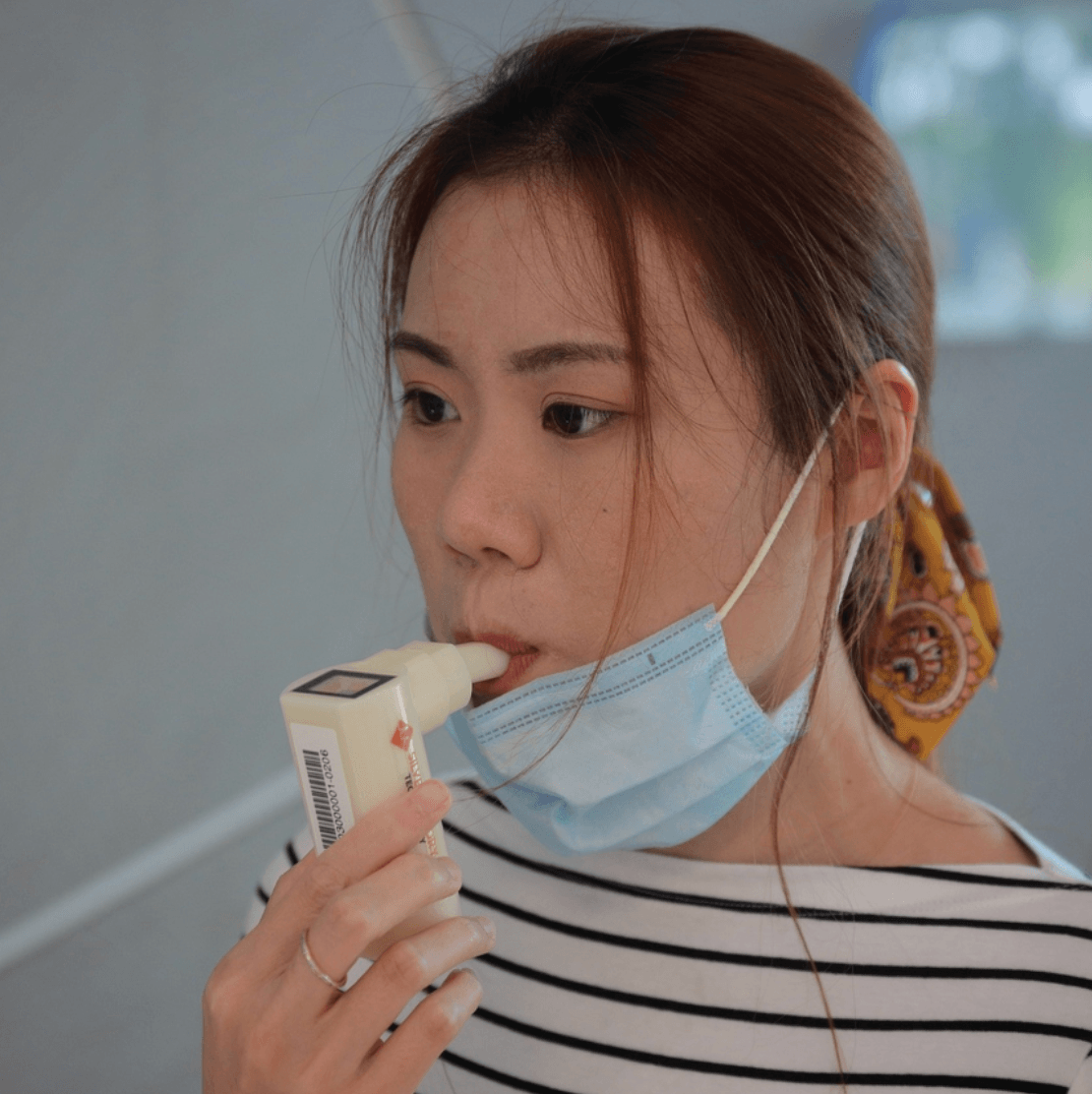


Imagine improving the air quality of an entire school, workplace, healthcare facility or gym being as simple as connecting to Wi-Fi.
That is our vision.
Just as an operating system connects hardware, software and users into a seamless experience, the Indoor Air Operating System will connect air quality monitoring, cloud analytics, artificial intelligence, public transparency and clean air interventions into one open, easy-to-use platform.
Our goal is simple: make improving indoor air quality so straightforward that any organisation can deploy and manage a professional indoor air quality system with minimal technical expertise.
A Plug-and-Play Experience
Getting started should be effortless.
Organisations simply tell us how many rooms they would like to monitor and, where possible, provide a floor plan showing room layouts and wall power outlet locations.
We then:
Configure the appropriate number of AirSpot monitors.
Configure and pre-register the required AirSpot Gateways.
Determine the optimal placement for each monitor and gateway before shipment.
Deliver everything ready for installation.
Once installed and connected to Wi-Fi, the AirSpot Gateways automatically begin collecting data from nearby AirSpot monitors and securely uploading data to the cloud. No complex networking, manual data collection or specialist IT knowledge is required.
No Floor Plans? No Problem.
Many organisations already have digital floor plans available. Where these are not accessible, the Indoor Air Operating System will provide simple step-by-step instructions enabling staff to create accurate 3D room scans using their existing smartphones.
Modern smartphones can rapidly capture room geometry, door and window locations and other important features. Multiple room scans can then be uploaded and stitched together to create a digital representation of the building, allowing us to determine the optimal locations for AirSpot monitors and AirSpot Gateways without requiring specialist surveying equipment or site visits.
Over time, this digital building model can become the foundation for even more advanced features, including automated room volume calculations, ventilation assessment, optimisation of monitor placement, recommendations for appropriately sized HEPA air cleaners, Far-UVC planning and other AI-assisted healthy building improvements.
This dramatically reduces deployment time and cost while making professional indoor air quality monitoring accessible to organisations of every size.
A Live Digital Twin of Indoor Air Quality
Every participating organisation receives a secure cloud dashboard providing continuous real-time and historical air quality information for every monitored room.
Rather than simply displaying CO₂ levels, the platform becomes a live digital representation of a building's indoor air quality, allowing facility managers to quickly identify rooms requiring attention and monitor improvements over time.
Historical trends, comparisons between rooms and long-term performance metrics enable organisations to make informed decisions based on evidence rather than assumptions.
AI-Powered Recommendations
Identifying a problem is only the first step.
The Indoor Air Operating System will use artificial intelligence to provide practical, room-specific recommendations tailored to each monitored space.
Depending on the characteristics of the room, the system may recommend:
Opening windows or adjusting ventilation practices.
Optimising HVAC operation or identifying opportunities for HVAC improvements.
Installing appropriately sized portable HEPA air cleaners.
Deploying Far-UVC technology where appropriate.
Reviewing occupancy patterns.
Accessing independent educational resources.
Linking directly to suitable clean air solutions where organisations choose to implement improvements.
As more buildings participate, the system will continuously learn from successful interventions, helping organisations identify the most effective and cost-efficient ways to improve indoor air quality.
Our goal is to transform indoor air quality monitoring from passive reporting into an intelligent decision-support platform.
Intelligent Alerts
The platform will continuously monitor every room and notify facility managers whenever indoor air quality exceeds selected thresholds or changes significantly.
Alerts can be delivered through the dashboard, email or mobile notifications, allowing issues to be addressed before they impact occupants.
Rather than waiting for complaints or periodic inspections, organisations can identify and respond to ventilation issues in real time.
QR Codes for Every Room
Every monitored room can display a QR code allowing staff, students, visitors or members of the public to instantly access live information for that room.
Scanning the QR code can provide:
Live air quality measurements.
Historical trends.
Ventilation insights.
AI-generated recommendations.
Educational information about indoor air quality.
Access (where enabled) to information from other monitored rooms throughout the building.
This creates transparency while helping occupants better understand and participate in maintaining healthier indoor environments.
Celebrating Clean Indoor Air Leaders
Organisations that wish to publicly demonstrate their commitment to healthier indoor environments can choose to publish selected information to the ICAAN/AirSpot Map.
Participating schools, businesses, healthcare facilities, gyms and community organisations will be able to showcase their commitment to monitoring and improving indoor air quality. Members of the public will be able to discover organisations actively championing healthier indoor environments, encouraging recognition, collaboration and patronage from people who value clean indoor air.
Over time, we hope the ICAAN/AirSpot Map becomes a global showcase of organisations leading the way in creating healthier buildings and inspires others to join the movement.
Building the World's Indoor Air Operating System
The Indoor Air Operating System is not simply another dashboard or monitoring platform.
It is an open ecosystem designed to bring together AirSpot monitors, AirSpot Gateways, cloud analytics, artificial intelligence, digital building models, research, education, public engagement and evidence-based clean air interventions into a single platform that anyone can deploy.
By dramatically reducing the complexity of implementing indoor air quality monitoring, we hope to enable organisations of every size—from individual classrooms and small businesses to hospitals, universities and entire building portfolios—to continuously measure, understand and improve the air people breathe.
As participation grows, the Indoor Air Operating System will become more than a monitoring platform. It will become a collaborative knowledge network where successful interventions can be shared, AI models refined, and organisations learn from one another to accelerate the global adoption of healthier indoor environments.
Just as smartphones made powerful computing accessible to everyone, our ambition is to make professional indoor air quality management accessible to every building.
Because healthier indoor air shouldn't require specialist expertise—it should simply work.
Indoor Air Operating System
An integrated platform for monitoring, understanding and improving indoor air.
What is the Indoor Air Operating System?
The Indoor Air Operating System (IAOS) is ICAAN's vision for making healthy indoor air as simple to manage as electricity, Wi-Fi or building security.
Rather than relying on isolated devices or standalone apps, the IAOS aims to bring together indoor air monitors, ventilation, filtration, environmental sensors, building information and cloud-based analytics into one connected, open platform.
Our goal is simple:
Help people understand their indoor air and make it easier to improve.
Why is it Needed?
Managing indoor air today can be surprisingly complex.
Building owners and facility managers often rely on multiple independent systems to understand what's happening inside their buildings, including:
CO₂ monitors
Air quality sensors
HEPA filtration
HVAC systems
Temperature and humidity sensors
Occupancy information
Building floor plans
Maintenance records
Outdoor environmental data
These systems rarely communicate with one another.
The Indoor Air Operating System aims to change that by providing a common platform capable of integrating data from many different technologies into one intuitive dashboard.
Where Are We Up To?
The Indoor Air Operating System is already beginning to take shape through a number of projects that are either operational or actively being developed.
Current building blocks include:
AirSpot indoor air quality monitors
AirSpot smartphone app
AirSpot Pro platform
Cloud synchronisation
AirSpot Dashboard
ICAAN Map
AirSpot Gateway development
Indoor mapping technologies
Open API planning
Open-source software and hardware architecture
Together these projects are laying the foundations for a connected indoor air ecosystem.
Near-Term Goals (Next 12–24 Months)
Our immediate priorities include:
Making large-scale deployments simple and intuitive.
Supporting rapid installation using existing floor plans or smartphone-based 3D room scans.
Expanding dashboard functionality.
Improving cloud connectivity.
Integrating AirSpot Gateways.
Supporting both local and cloud-based building monitoring.
Providing open APIs for developers and researchers.
Making indoor air management achievable in minutes rather than hours.
The aim is to make indoor air management practical for schools, workplaces, healthcare facilities, sporting organisations and community buildings.
Longer-Term Vision
The Indoor Air Operating System is intended to become an open platform capable of integrating many different aspects of healthier indoor environments.
Future capabilities may include:
Indoor air quality monitoring
Building ventilation performance
HEPA filtration management
HVAC integration
Occupancy analytics
Weather integration
Outdoor air quality
Energy optimisation
Environmental pathogen surveillance
Respiratory epidemiological dashboards
Building digital twins
AI-assisted recommendations
Automated reporting
Smart building integration
Rather than replacing existing technologies, the IAOS aims to connect them.
Open by Design
ICAAN believes healthy indoor air should benefit from open collaboration.
The Indoor Air Operating System is therefore being developed with an emphasis on:
Open standards
Interoperability
Open APIs
Community collaboration
Transparency
Extensibility
We hope the platform becomes something researchers, developers, manufacturers and organisations can build upon together.
Learning from Great Projects Already Underway
The Indoor Air Operating System is not being developed in isolation.
Around the world, researchers, schools, technology companies and public organisations are already demonstrating innovative approaches to indoor air quality monitoring, visualisation and building management.
Rather than duplicating these efforts, ICAAN aims to learn from them, collaborate where possible and help connect compatible systems through open standards and shared data.
Boston Public Schools Indoor Air Quality Dashboard
One of the world's leading examples of large-scale indoor air quality transparency is the Boston Public Schools Indoor Air Quality Dashboard.
Thousands of sensors have been installed throughout classrooms and school buildings, with live information made publicly available through an online dashboard. The system helps facilities teams identify ventilation issues, optimise HVAC performance and build confidence within the school community through transparent reporting.
This is exactly the type of initiative ICAAN hopes to learn from and collaborate with.
Reference:
Boston Public Schools Indoor Air Quality Dashboard
Enterprise Indoor Air Dashboards
Companies such as Kaiterra have demonstrated how indoor air quality information from multiple buildings can be integrated into powerful cloud dashboards.
These platforms combine sensor data, alerts and analytics to simplify building management and improve environmental performance.
The Indoor Air Operating System shares many of these goals while placing particular emphasis on openness and interoperability.
Reference:
Kaiterra
QR Code Indoor Air Transparency
An exciting trend is the use of QR codes displayed at building entrances or within occupied spaces.
Visitors simply scan the QR code using their smartphone to access live information about the indoor environment, such as:
CO₂
PM₂.₅
Temperature
Relative humidity
Ventilation performance
Historical trends
This simple approach makes indoor air quality visible to everyone and encourages transparency.
The Indoor Air Operating System aims to support similar public-facing capabilities while remaining compatible with multiple hardware manufacturers and dashboard providers.
Open Standards
ICAAN also hopes to work alongside organisations developing open standards and guidance for healthier buildings, including initiatives such as:
ASHRAE Standard 241
RESET Air
AirGradient
SAMHE (Schools' Air quality Monitoring for Health and Education)
Rather than competing with these initiatives, we see the Indoor Air Operating System as an opportunity to connect and amplify their impact.
Who Could Benefit?
Potential users include:
Schools
Universities
Healthcare facilities
Sporting organisations
Workplaces
Libraries
Hospitality venues
Public buildings
Researchers
Community organisations
Local councils
Ultimately, anyone responsible for indoor environments should be able to understand and improve the air people breathe.
How You Can Help
The Indoor Air Operating System is still evolving, and collaboration is central to its success.
We're particularly interested in connecting with:
Software developers
UX designers
Engineers
Researchers
HVAC specialists
Building scientists
Schools
Universities
Healthcare organisations
Sporting organisations
Pilot sites
Manufacturers
Open-source contributors
Philanthropic organisations
Funding partners
Whether you're interested in testing new ideas, contributing expertise, integrating technology or supporting the project financially, we'd love to hear from you.
Join Us
Healthy indoor air shouldn't be difficult.
By bringing together people, technology and open collaboration, the Indoor Air Operating System aims to make healthier indoor environments easier to create, understand and maintain.
We're not trying to build every piece ourselves.
We're building a platform that can connect the world's best ideas, technologies and organisations working towards a common goal:
Healthy indoor air for everyone.
If you'd like to help shape the future of indoor air, we'd love to hear from you.