
Building Open Public Infrastructure for Indoor Clean Air
When we first launched the AirSpot Map, our vision was relatively modest.
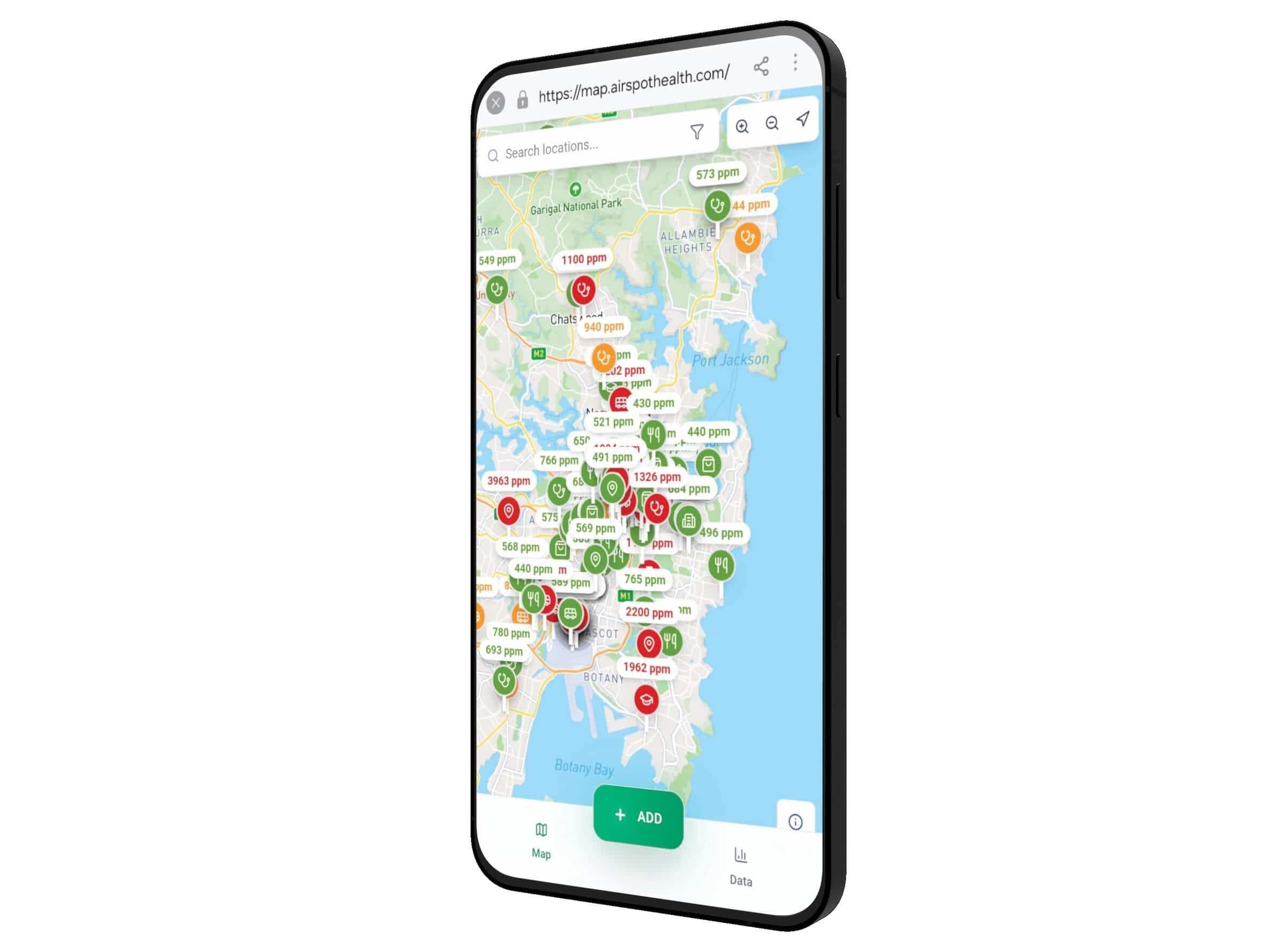
We wanted to create a place where AirSpot users could share indoor carbon dioxide (CO₂) measurements and help others discover healthier indoor environments.
What we didn't anticipate was how quickly that simple idea would grow.
Today, we're excited to share the next chapter of that journey.
The AirSpot Map is evolving into the ICAAN Map (Indoor Clean Air Adoption Network)—an open, collaborative platform designed to become shared public infrastructure for healthier indoor air.
A Bigger Vision
Indoor air quality affects every school, workplace, hospital, café, library and public building.
Yet the information available about these spaces is often fragmented, difficult to access and rarely shared between organisations.
Our vision is to change that.
Rather than building another map for a single product, we're building an open platform where communities, researchers, schools, businesses and governments can work together to improve indoor environments.
We want the ICAAN Map to become a place where people can:
- Discover healthier indoor spaces.
- Share indoor air quality measurements.
- Track improvements over time.
- Learn about clean air technologies in buildings.
- Support research.
- Encourage transparency.
- Inspire healthier buildings around the world.
Ultimately, we hope it becomes the world's largest open map of healthier indoor spaces.
Thank You, Kanro
None of this would have been possible without the incredible support of the Kanro Foundation.
Kanro has believed in AirSpot from an early stage and has encouraged us to think beyond individual devices towards creating public infrastructure that can benefit everyone.
We are deeply grateful for their confidence in our work.
More recently, we submitted a proposal describing the next stage of the platform's evolution—transforming the AirSpot Map into a fully open, interoperable, community-driven ICAAN Map with improved documentation, historical records, open APIs, data integration and QR-enabled venue profiles.
We're excited about the possibility of continuing this journey together and expanding the platform into an even more valuable resource for the global clean air community.
Where We Are Today
The AirSpot Map has already grown well beyond its original purpose.
Today it includes:
- Thousands of indoor air quality locations.
- Community-submitted CO₂ measurements.
- Interactive mapping.
- Cloud synchronisation.
- Organisation accounts.
- Imported third-party datasets.
- Support for sharing healthier indoor spaces.
Importantly, we've demonstrated that indoor air quality information from different sources can be brought together into a single shared platform.
Now we're working on making that process dramatically easier.
Building Public Infrastructure
The next stage is about much more than adding new features.
It's about building infrastructure that others can build upon.
Over the coming months we plan to expand the platform with:
Historical Venue Records
Instead of storing individual measurements in isolation, every participating venue will have a permanent profile showing how indoor air quality changes over time.
This creates a valuable historical record for schools, workplaces, researchers and communities.
Open Data Integration
We're making it easier for organisations to contribute indoor air quality information from many different sources.
Whether data comes from AirSpot, another monitor, a university research project or a building management system, we want ICAAN to become a common home for indoor air quality information.
Open APIs
Developers will be able to build new applications using ICAAN data through documented public APIs.
This will support:
- Research
- Mobile apps
- Smart buildings
- Dashboards
- AI tools
- Educational platforms
The goal is interoperability—not lock-in.
QR-Enabled Buildings
Imagine walking into a school, office or café and seeing a QR code near the entrance.
With a quick scan, visitors could view:
- Current indoor air quality.
- Historical trends.
- Ventilation information.
- Clean air technologies installed within the building.
- Community updates.
We believe QR-enabled venues could become an important way of promoting transparency and building confidence in healthier indoor environments.
Looking Beyond AirSpot
Perhaps the biggest change in our thinking is recognising that the future shouldn't revolve around a single monitor.
The ICAAN Map is being designed to welcome information from many different sources.
We hope to work alongside monitor manufacturers, researchers, schools, governments and community organisations to build something that benefits everyone.
Healthy indoor air is simply too important to exist within isolated ecosystems.
Why Open Source?
Like all AirSpot projects, the ICAAN Map is being developed using an open-source copyleft philosophy.
We believe openness accelerates innovation.
It encourages:
- Transparency.
- Collaboration.
- Independent review.
- Interoperability.
- Community contributions.
- Long-term sustainability.
Rather than creating another closed platform, we hope ICAAN becomes something the global community can improve together.
Looking Ahead
Our long-term vision extends well beyond today's map.
One day, the ICAAN Map may integrate:
- Indoor air quality measurements.
- Historical venue records.
- Ventilation performance.
- HEPA filtration.
- Far-UVC installations.
- Building performance information.
- Respiratory epidemiological dashboards.
- Environmental pathogen surveillance.
- Indoor Air Operating System integrations.
Imagine walking into any participating building, scanning a QR code and immediately understanding not only how clean the air is today, but how it has improved over time and what measures are in place to keep occupants healthy.
That's the future we're working towards.
How You Can Help
The ICAAN Map is a community project, and we'd love your support.
You can help by:
- Adding indoor air quality readings to the map.
- Encouraging your school, workplace or organisation to participate.
- Sharing the project with others.
- Purchasing AirSpot products that help fund ongoing development.
- Making a donation to support ICAAN.
- Introducing us to potential collaborators, researchers or funding partners.
Every reading, every venue and every supporter helps build a more complete picture of indoor air quality around the world.
Join the Movement
The ICAAN Map isn't simply about mapping CO₂.
It's about creating a global community committed to healthier indoor environments.
By working together, sharing openly and learning from one another, we believe we can build an enduring public resource that benefits schools, workplaces, healthcare facilities and communities for generations to come.
This is just the beginning.
We invite you to help us build the world's most open and collaborative map of healthier indoor spaces.